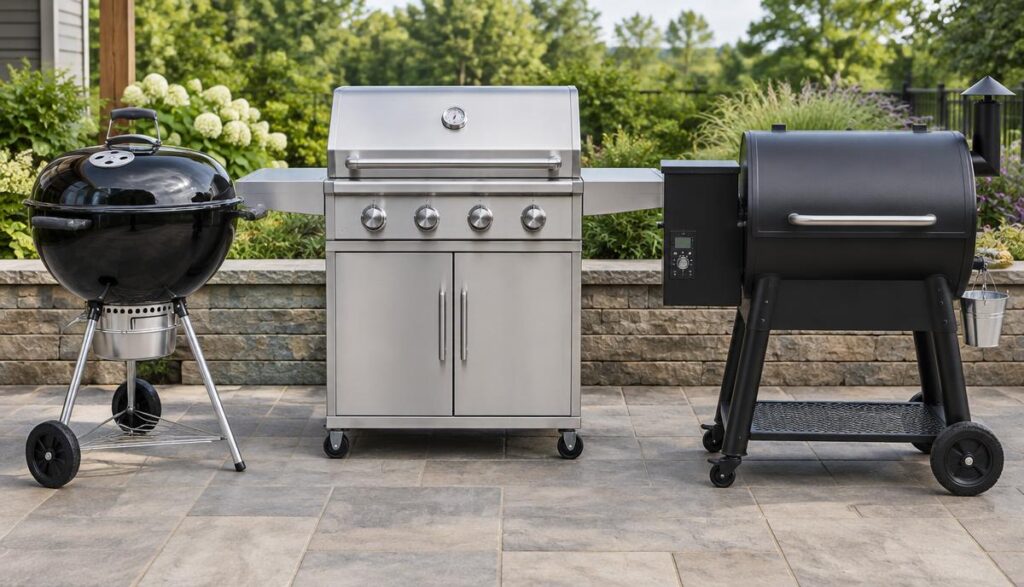
Choosing a new grill is one of the biggest BBQ decisions you’ll make. The three main types (charcoal, gas and pellet) each cook differently, cost differently and suit different lifestyles. Here’s an honest comparison to help you choose the best BBQ grill for your backyard in Canada.
Quick Comparison
| Charcoal | Gas (propane / natural gas) | Pellet | |
|---|---|---|---|
| Flavour | Strong, classic smoky | Clean, mild | Wood smoke, gentle |
| Start-up time | 15–25 minutes | 10–15 minutes | 10–20 minutes |
| Max heat | Very high | High | Moderate to high |
| Ease of use | Takes practice | Easiest | Very easy (thermostat) |
| Low & slow smoking | Good with practice | Limited | Excellent |
| Needs electricity | No | No | Yes |
| Winter performance | Good | Good (propane pressure drops in deep cold) | Fair to good; uses more pellets |
| Typical price | Lowest | Low to high | Mid to high |
Charcoal Grills
Charcoal grills, from simple kettles to ceramic kamado cookers, are loved for their flavour and searing power. Burning charcoal and dripping fat create the smoky taste many people think of as “real BBQ.”
Pros
- Excellent searing heat for steaks and burgers
- Rich, smoky flavour
- Affordable entry price
- Works anywhere, no power or gas line needed
Cons
- Longer start-up and clean-up (ash disposal)
- Temperature control takes practice with the vents
- Fuel cost adds up if you grill often
Best for: flavour lovers, weekend cooks who enjoy the process, and anyone on a budget.
Gas Grills
Gas grills are the most common type in Canada. Push a button, turn a knob, and you’re cooking in minutes.
Pros
- Fast start-up and precise burner control
- Easy to cook for a crowd
- Natural gas models never run out of fuel
- Easy clean-up
Cons
- Less smoky flavour (a smoker box with wood chips helps)
- Propane tanks must be refilled or exchanged
- More parts that can wear out: burners, igniters, regulators
Best for: weeknight grillers, families, and anyone who values convenience.
Pellet Grills
Pellet grills burn hardwood pellets and use a digital controller to hold a set temperature, much like an outdoor oven. Many connect to phone apps.
Pros
- Set-it-and-forget-it temperature control
- Excellent for brisket, ribs, pork shoulder and smoked salmon
- Real wood-smoke flavour with little effort
- Versatile: smoke, roast, bake and grill
Cons
- Needs an electrical outlet
- Pellets must be kept dry; damp pellets can jam the auger
- Many models don’t sear as hot as charcoal or gas
- Higher starting price
Best for: people who want to smoke meats without babysitting a fire.
What About the Canadian Winter?
All three grill types can be used year-round in Canada. Charcoal burns hot regardless of the temperature. Gas grills work well, but propane pressure falls in extreme cold, so keep tanks full. Pellet grills burn more fuel in winter; an insulated blanket made for your model can help. Read more in The Ultimate Guide to BBQ in Canada.
Which Grill Should You Buy?
- Want maximum flavour on a budget? Charcoal.
- Want quick, easy dinners most nights? Gas.
- Want to get into smoking with minimal fuss? Pellet.
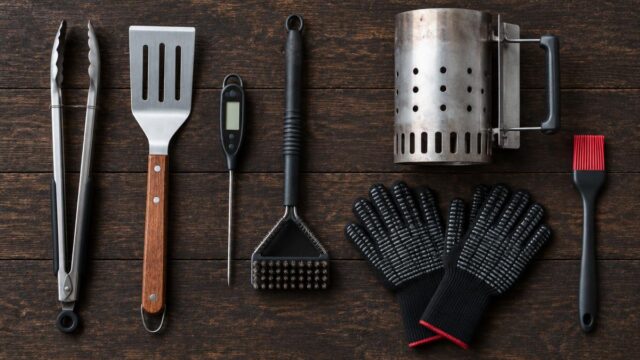
Many serious backyard cooks end up owning two: a gas grill for weeknights and a charcoal or pellet grill for weekends. Whatever you choose, pick up the essential BBQ tools to go with it, and learn direct vs. indirect heat to get the most from any grill.
Leave a Reply