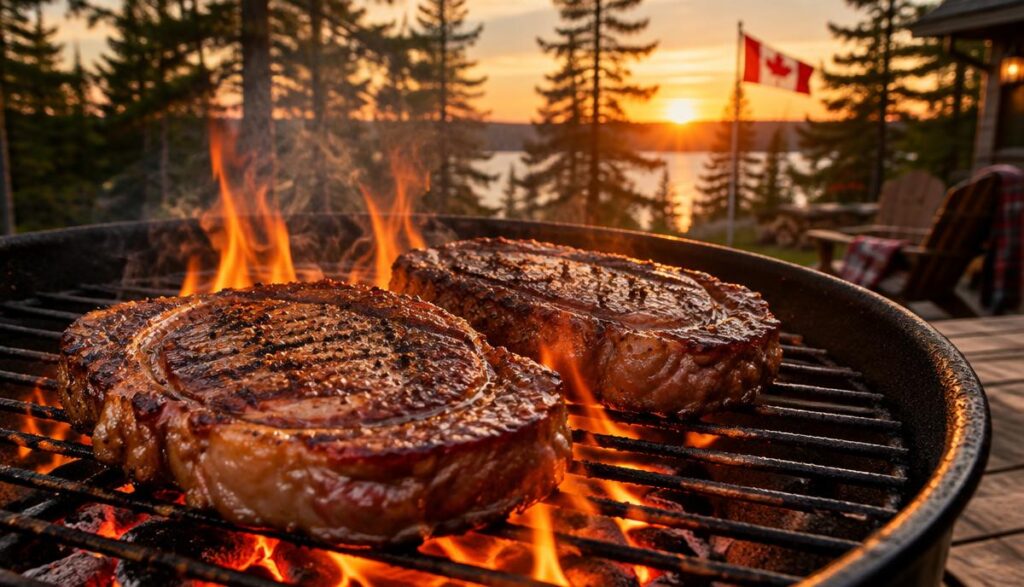
Canadian BBQ is more than a summer hobby. From the first warm weekend in May to the die-hards grilling through a February snowfall, Canadians take outdoor cooking seriously. This guide covers everything you need to know about BBQ in Canada: the grills, the fuel, the seasons, the regional flavours and the basic skills that make every cookout better.
What “BBQ” Means in Canada
In Canada, people use the word “BBQ” for two things. Most of the time it means the grill itself (“fire up the barbecue”) and fast, hot cooking over direct heat: burgers, steaks, hot dogs, chicken and vegetables. The other meaning is true low-and-slow barbecue, where tougher cuts like brisket, pork shoulder and ribs cook for hours with smoke and gentle heat. A good Canadian backyard cook learns both styles.
Grilling is quick and hot, usually above 200°C (400°F). Barbecue in the slow sense runs around 110–135°C (225–275°F) and relies on time and smoke to turn tough meat tender.
Choosing a Grill for the Canadian Climate
Our weather is the biggest difference between grilling in Canada and grilling almost anywhere else. Cold, wind and snow pull heat out of a grill fast. When you shop, look for:
- Heavy construction. Thicker steel, cast-aluminium fireboxes and double-walled lids hold heat better in cold weather.
- Enough burner power. On gas grills, a well-built cooking box matters more than the BTU number alone, but very low-powered grills struggle in winter.
- Rust resistance. Stainless steel, porcelain-enamelled finishes and a good cover help a grill survive freeze-thaw cycles.
- Parts availability. Brands with Canadian distribution make it easier to find replacement burners, grates and igniters.
Not sure which fuel to pick? Read our full comparison: Charcoal vs. Gas vs. Pellet Grills.
Fuel Options: Propane, Natural Gas, Charcoal and Pellets
Propane
Propane is the most common fuel in Canadian backyards. Tanks are easy to exchange at hardware stores and gas stations. Propane pressure drops in very cold weather, so keep a spare tank on hand and store tanks outside and upright, never in a garage or house.
Natural Gas
If your home has a natural gas line, a natural gas grill means you never run out mid-cook. Grills are built for either propane or natural gas, so check before buying. Installation should be done by a licensed gas fitter.
Charcoal
Charcoal delivers high heat and classic smoky flavour. Lump charcoal lights fast and burns hot; briquettes burn longer and more evenly. A chimney starter is the easiest way to light either without lighter fluid.
Wood Pellets
Pellet grills use compressed hardwood pellets fed by an auger and controlled by a thermostat. They make smoking easy, but they need electricity and dry storage for pellets.
Regional Flavours Across Canada
Canada doesn’t have one BBQ style. It has many local favourites:
- West Coast: cedar-plank salmon, a tradition with deep roots on the Pacific coast.
- Prairies: Alberta beef steaks and roasts, plus bison burgers.
- Ontario: peameal bacon on a bun, ribs and backyard burgers.
- Quebec: maple-glazed meats and grilled sausages.
- Atlantic Canada: grilled lobster, scallops and fish.
Want ideas for your next cookout? See The Best BBQ Foods for a Canadian Summer.
The Core Skills Every Canadian Griller Needs
1. Heat control
Learn the difference between direct heat (food right over the flame) and indirect heat (food beside the flame, lid closed). This one skill solves most burnt-outside, raw-inside problems. Our guide to direct vs. indirect heat explains how to set it up on any grill.
2. Cooking by temperature, not time
An instant-read thermometer is the most useful tool you can own. Health Canada recommends these safe internal temperatures:
| Food | Safe internal temperature |
|---|---|
| Ground beef, pork, veal | 71°C (160°F) |
| Ground poultry | 74°C (165°F) |
| Chicken pieces | 74°C (165°F) |
| Whole poultry | 82°C (180°F) |
| Pork chops and roasts | 71°C (160°F) |
| Beef steaks and roasts | 63°C (145°F) or higher |
| Fish | 70°C (158°F) |
3. Keeping the grill clean
Clean grates prevent sticking and flare-ups, and a yearly deep clean keeps your grill working for years. See Essential BBQ Tools for the right brush and accessories.
Grilling Through a Canadian Winter
Winter grilling is absolutely possible. Clear snow from around the grill, keep the lid closed as much as you can, allow extra preheating time and expect longer cooking times. Shelter the grill from wind, but never grill inside a garage, shed or enclosed area because of carbon monoxide risk.
BBQ Safety Basics
- Keep the grill well away from your house, deck railings and overhanging branches. Follow your grill manual’s clearance distances.
- Check propane connections each spring with soapy water: bubbles mean a leak.
- Open the lid of a gas grill before lighting it.
- Keep raw and cooked food on separate plates.
- Let charcoal ashes cool completely in a metal container before disposal.
Where to Go Next
Start with the basics in 10 Grilling Tips Every Backyard Cook Should Know, then try our recipes for the perfect steak and juicy grilled chicken. Welcome to the club.
Leave a Reply