If there’s one grilling technique that separates beginners from confident backyard cooks, it’s knowing when to use direct heat and when to use indirect heat. Master this, and you’ll stop burning the outside of your food while the inside is still raw.
What Is Direct Heat?
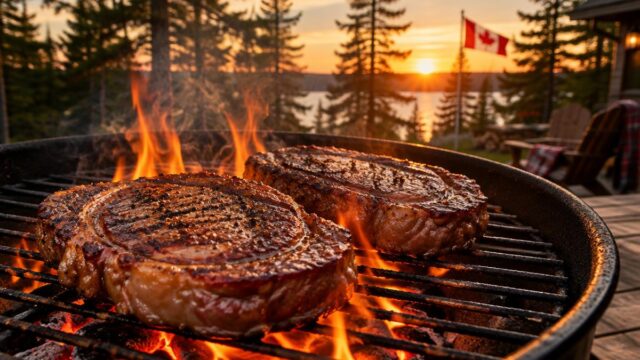
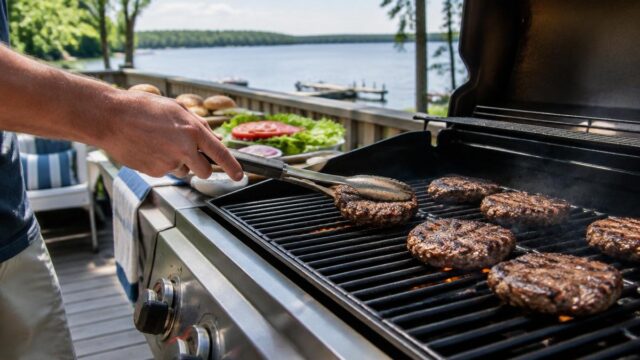
Direct heat means cooking food right over the flame or hot coals. It’s fast and very hot, typically 230–290°C (450–550°F), and it creates searing, browning and grill marks.
Use direct heat for food that cooks in under 20 minutes:
- Burgers and hot dogs
- Steaks, chops and kebabs
- Boneless chicken pieces
- Shrimp, scallops and thin fish fillets
- Most vegetables and sliced fruit
What Is Indirect Heat?
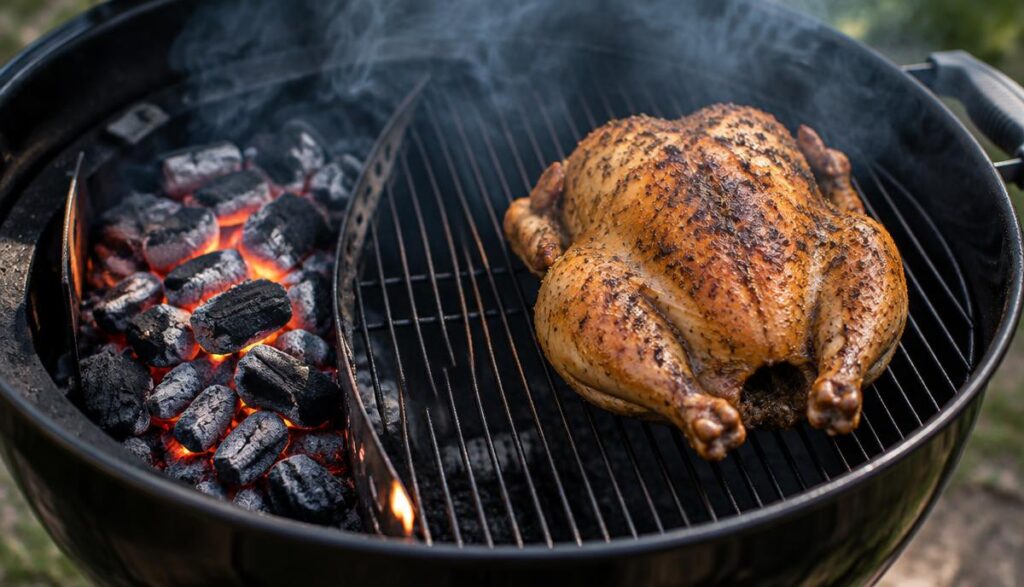
Indirect heat means placing food beside the heat source rather than over it, with the lid closed. The grill works like an oven, circulating hot air around the food. Temperatures are usually 120–190°C (250–375°F).
Use indirect heat for food that needs more than 20 minutes:
- Whole chickens and bone-in chicken pieces
- Ribs, pork shoulder and brisket
- Roasts and whole turkeys
- Thick steaks (after or before searing)
- Whole fish and cedar-plank salmon
The Two-Zone Fire: The Best of Both
A two-zone setup gives you a hot side and a cool side at the same time. You can sear over direct heat, then move food to the indirect side to finish cooking gently. It also gives you a safe place to move food if flare-ups happen.
Two-zone fire on a charcoal grill
- Light your charcoal in a chimney starter.
- Pour the hot coals onto one half of the charcoal grate. Leave the other half empty.
- Optionally, place a disposable aluminium pan with water on the empty side to catch drips.
- Put the cooking grate on, close the lid and preheat for 5–10 minutes.
- Control temperature with the vents: more open for hotter, partly closed for cooler. Never close them completely while cooking.
Two-zone fire on a gas grill
- Preheat with all burners on high for 10–15 minutes.
- Turn off one or two burners, or turn one side to low.
- Place food over the unlit burners for indirect cooking.
- Adjust the lit burners to hold the temperature you want on the lid thermometer.
Pellet grills
Pellet grills cook mostly with indirect heat by design. For searing, many models have a direct-flame setting or a high setting. You can also use a cast-iron pan preheated on the highest setting.
The Reverse Sear
For thick steaks (4 cm / 1½ in and up), try the reverse sear: cook on the indirect side first until the steak is about 6–8°C (10–15°F) below your target, then finish over high direct heat for a minute or two per side. The result is an even pink centre from edge to edge. See our perfect steak guide.
Quick Reference
| Food | Method |
|---|---|
| Burgers, hot dogs, thin steaks | Direct |
| Thick steaks, pork chops | Sear direct, finish indirect |
| Boneless chicken | Sear direct, finish indirect |
| Bone-in chicken | Indirect, crisp direct at the end |
| Ribs, brisket, pork shoulder | Indirect (low & slow) |
| Vegetables | Direct (medium-high) |
| Whole chicken or turkey | Indirect |
Ready to put it into practice? Try juicy grilled chicken or plan a full menu with the best BBQ foods for a Canadian summer.
Leave a Reply